Cart
0
You may also like


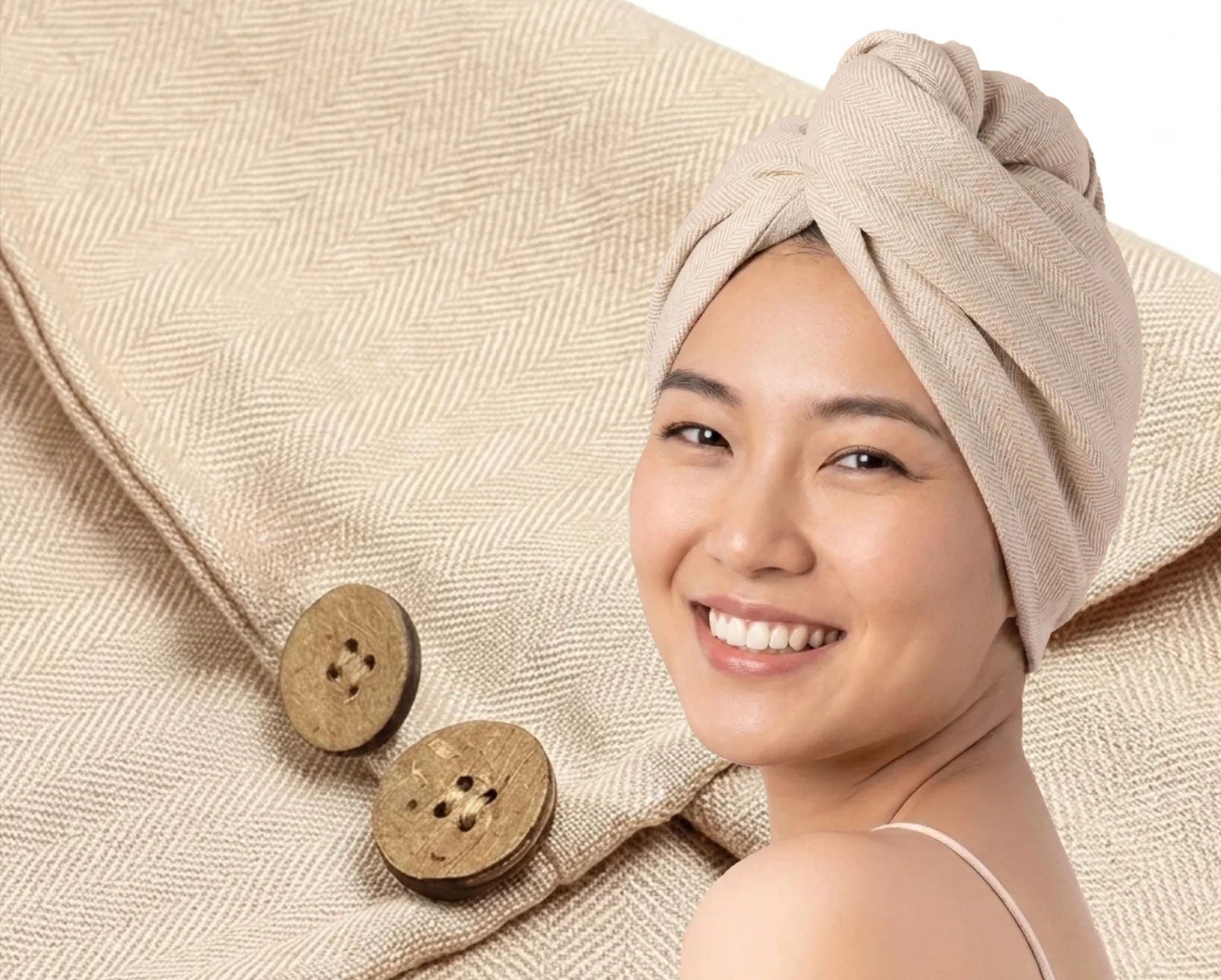
You may have a carefully planned hair-care routine, use the right shampoo and conditioner, and avoid excessive heat—but there is one everyday habit that could still be contributing to frizz, breakage, and rough-looking hair: the way you dry your hair with a towel.
After washing your hair, it is common to grab a regular bath towel and vigorously rub your hair until it feels mostly dry. However, wet hair is more fragile and can be more vulnerable to breakage. Dermatologists recommend being gentle with wet hair and avoiding rough towel rubbing, which can contribute to hair damage.
The good news? You don't necessarily need to change your entire hair-care routine. Simply changing how you dry your hair—and the towel you use—can make a difference.
The problem is not simply that you are using a towel. The bigger issue is friction and rough handling.
When your hair is wet, it is more delicate. Rubbing it aggressively with a coarse or textured towel can create unnecessary friction between the towel and hair strands. Over time, repeated friction and rough handling may contribute to breakage, frizz, split ends, and a rougher appearance.
The Dermatology recommends wrapping wet hair in a towel to absorb water rather than rubbing the hair dry.
This is particularly important if you have:
One of the biggest mistakes people make is treating wet hair exactly like dry hair.
Wet hair is more delicate, which is why dermatologists recommend minimizing unnecessary handling. For straight hair, it can be helpful to allow the hair to partially dry before gently combing it. For curly or textured hair, a wide-tooth comb can be used while the hair is damp to help minimize breakage.
That same gentle approach should apply when drying your hair.
Instead of aggressively twisting, rubbing, or squeezing your hair with a towel, gently wrap it and allow the fabric to absorb excess moisture.
Your towel may be worth reconsidering if you regularly notice:
Excessive Frizz After Washing
If your hair looks noticeably frizzier immediately after drying, rough towel friction may be one factor contributing to the problem.
Increased Hair Breakage
Hair breakage can make your hair appear shorter, uneven, or less healthy. While many factors can contribute to breakage, rough handling of wet hair is a preventable source of mechanical damage.
More Split Ends
Repeated friction and rough handling can contribute to hair wear over time, especially when combined with heat styling, chemical treatments, or frequent brushing.
Hair Feels Rough After Drying
Your hair should not need aggressive rubbing to remove excess water. A towel that absorbs moisture efficiently can help you dry your hair more gently.
When choosing a towel for hair, softness and absorbency are important considerations.
A good hair towel should help remove excess moisture without requiring excessive rubbing. The goal is not to completely dry your hair instantly but to absorb enough water so your hair can finish drying naturally or with minimal heat.
This is one reason many people are moving away from traditional rough towel-drying methods and looking for softer alternatives such as microfiber hair towels and bamboo towels.
Dermatology specifically notes that wrapping hair in a microfiber towel can help it dry more quickly and reduce the amount of blow-drying needed.
If you are looking for a soft towel for hair, bamboo fabric is another option worth considering.
Bamboo fabric is naturally soft and is known for its moisture-wicking properties. Debaans describes its bamboo fabric as soft, absorbent, moisture-wicking, durable, and naturally antimicrobial.
A bamboo towel for hair can be particularly appealing if you want a softer fabric against your hair and skin while maintaining good absorbency.
For people with dry, curly, or frizz-prone hair, choosing a soft and absorbent towel can complement a gentle hair-care routine.
Debaans customers have also specifically mentioned using its bamboo products for dry and curly hair, including feedback about helping with dryness and frizz.
Bamboo Towel vs. Regular Bath Towel for Hair
A regular bath towel is designed primarily to dry the body. Depending on its construction and texture, it may create more friction when rubbed against delicate wet hair.
A softer bamboo towel can provide a more comfortable alternative for people who want to minimize rough handling after washing.
However, the fabric alone is not the entire solution. How you use the towel matters just as much.
Even with a soft towel, avoid aggressively rubbing your hair.
Instead:
You don't need a complicated routine to protect your hair after washing.
1. Don't Rub Your Hair
This is perhaps the most important change.
Instead of rubbing your hair back and forth with a towel, gently wrap your hair and allow the towel to absorb the water. Dermatologists specifically recommend this approach because rough towel rubbing can contribute to hair damage.
2. Choose a Soft, Absorbent Towel
Look for a towel that feels gentle against your hair and absorbs moisture effectively.
A bamboo hair towel can be a useful choice if softness, absorbency, and comfort are priorities.
3. Avoid Tight Twisting
Twisting wet hair tightly into a towel can put unnecessary tension on the strands.
Instead, loosely wrap your hair and let the towel do the work.
4. Don't Brush Aggressively
Wet hair needs gentle handling. If you need to detangle your hair, use an appropriate wide-tooth comb and avoid pulling through knots.
5. Reduce Excessive Heat
Blow dryers, straighteners, and curling irons can contribute to hair damage. When using a blow dryer, dermatologists recommend lower heat settings and reducing how frequently you use heat whenever possible.
Curly and textured hair can be especially vulnerable to dryness and frizz. The natural shape of curls can make it more difficult for oils from the scalp to travel along the hair shaft, which can contribute to dryness.
That is why your hair-drying technique for curly hair matters.
Instead of rubbing curls with a towel, gently squeeze or wrap them to remove excess water. A soft towel can help you manage moisture without unnecessary friction.
If you have curly hair, you may also want to consider a bamboo towel for curly hair as part of a gentler post-wash routine.
Many people focus heavily on the products they use in the shower but overlook what happens immediately afterward.
You can use an excellent shampoo and conditioner, but aggressive drying, frequent brushing, and excessive heat can still contribute to hair damage.
Think of your post-wash routine as an extension of your hair-care routine.
Wash gently. Condition properly. Dry carefully. Handle wet hair with care.
Small changes can help reduce unnecessary mechanical stress on your hair.
Debaans offers bamboo bath towels designed around softness, absorbency, and everyday comfort. The brand describes its bamboo fabric as naturally soft, moisture-wicking, durable, and more sustainable than conventional fabric options.
Its collection includes bamboo bath towels in different colours and styles, including individual towels and towel sets.
If you're looking for a soft towel for hair, a bamboo bath towel, or a more comfortable alternative to your traditional towel, explore the collection at Debaans.
Your towel may seem like a small part of your daily routine, but the way you dry your hair can affect how much friction and stress your strands experience.
The biggest change is simple: stop rubbing your hair aggressively.
Use a soft, absorbent towel, gently wrap your hair, avoid excessive twisting, and allow your hair to air dry when possible. These simple habits can help reduce unnecessary damage and support healthier-looking hair.
If you want to upgrade your post-shower routine, consider choosing a soft bamboo towel for hair that combines absorbency with a gentle feel.
Because healthy-looking hair isn't only about what you put on it—it's also about how you treat it every day.